Choosing Your Firearm: A Practical Comparison of Handguns, Rifles, and Shotguns
Choosing Your Firearm: A Practical Comparison of Handguns, Rifles, and Shotguns
You’re standing at the counter with a budget of $800. On one side sits a polymer-framed 9mm like a Glock 19, on the other, a base-model AR-15. This isn’t a theoretical debate; it’s a real decision that hinges on intended use, and choosing wrong means wasting money on a tool that doesn’t fit the task. At Firearms Montana, we break down firearms by their function, not just their features.
Defensive Handguns: Striker-Fired vs. Hammer-Fired
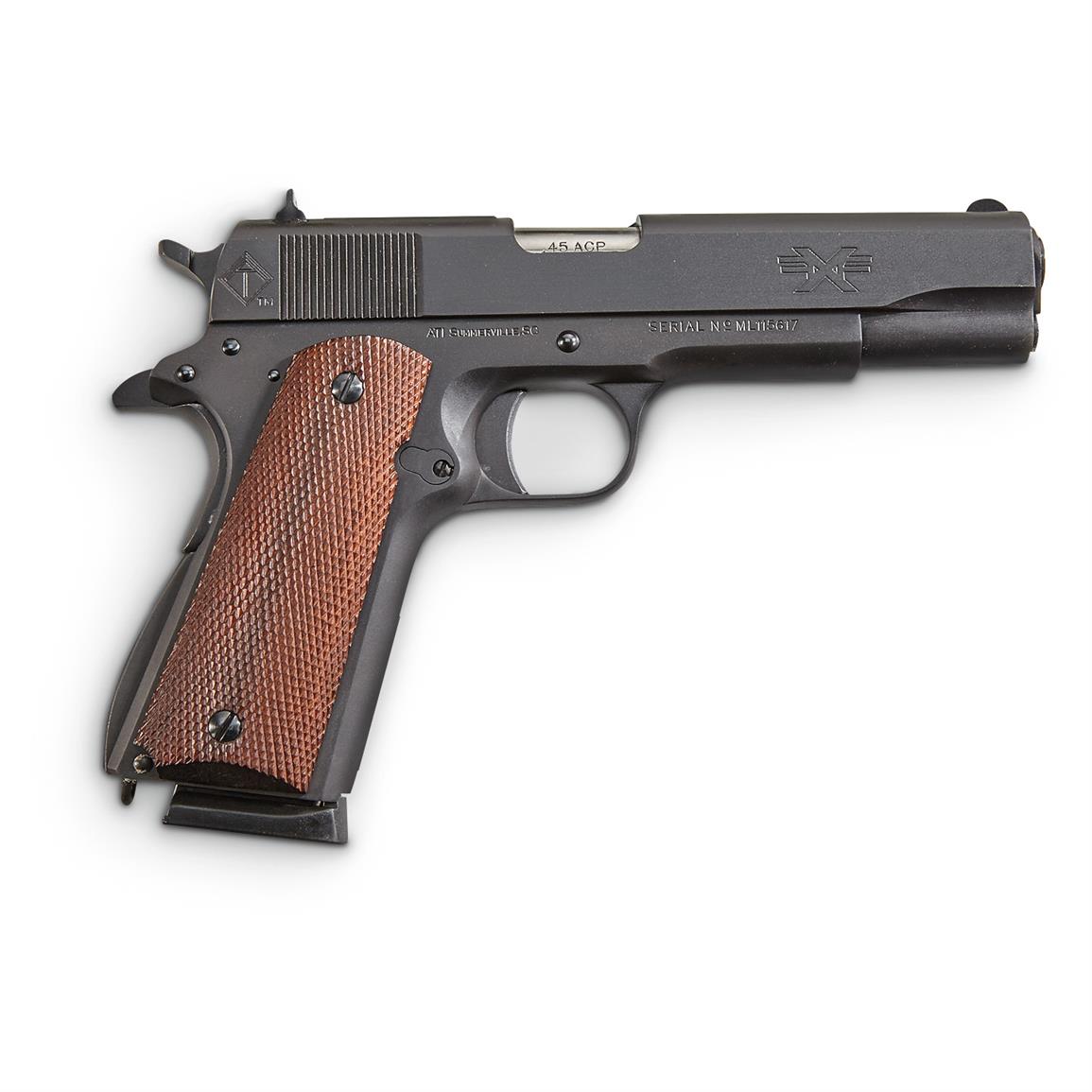
The modern defensive handgun market is dominated by striker-fired designs for good reason. Models like the Glock 19, SIG Sauer P320, and Smith & Wesson M&P9 2.0 offer consistent triggers, simplified manual of arms, and high reliability right out of the box. Their polymer frames make them lightweight for all-day carry. For a dedicated home defense role where concealment isn’t a factor, a full-size model like the Glock 17 or a FN 509 Tactical offers a longer sight radius and increased capacity. Hammer-fired guns, like the classic 1911 in .45 ACP or the CZ 75, appeal to purists who prefer a crisp single-action trigger and manual safety. However, they often require more training to master their safety levers and decockers. For your first or primary defensive pistol, a striker-fired 9mm is almost always the correct answer.
The AR-15 Platform: Unmatched Versatility in a Rifle
No other firearm offers the modularity and adaptability of the AR-15. Chambered primarily in 5.56 NATO/.223 Remington, it’s a platform, not just a rifle. You can start with a basic 16-inch carbine from a reputable maker like Smith & Wesson (M&P15) or Ruger (AR-556) for under $800. From there, you can swap the upper receiver to change calibers to .300 Blackout for suppressed use, 6.5 Grendel for longer range, or even 9mm for cheap training. The accessory ecosystem is unparalleled: within minutes, you can add a weapon light, red dot optic, and sling, transforming it from a ranch rifle to a home defense tool. While bolt-actions are more accurate for precision work, the semi-automatic AR is the definitive general-purpose rifle for most American shooters. We stock a wide selection of complete rifles and critical components in our online store to build or customize your own.
Scatterguns: Pump-Action Reliability vs. Semi-Auto Speed
For home defense and hunting, the shotgun is a powerhouse. The 12-gauge pump-action, like the Mossberg 500 or Remington 870, is legendary for its durability and intimidating sound. They are simple, less expensive (often under $500), and can cycle any load from light target to 3-inch magnum slugs. The trade-off is the need to manually cycle the action, which can lead to short-stroking under stress. Semi-automatic shotguns like the Beretta A300 or the Mossberg 930 eliminate that user error, providing faster follow-up shots. They are softer shooting but more expensive and can be finicky with low-power loads. For a dedicated home defense gun loaded with 00 buck, a pump is hard to beat. For waterfowl hunting or 3-gun competition where you’ll fire hundreds of shells, a quality semi-auto is worth the investment.
Rimfire vs. Centerfire: The Critical Caliber Divide for Training
This is the most important cost calculation a shooter makes. Centerfire rifle ammunition, like 5.56 or .308 Winchester, costs between $0.50 and $1.50 per round. A single training session can burn through $200 in ammo alone. A .22 LR rimfire rifle, such as the Ruger 10/22 or a bolt-action CZ 457, fires ammunition costing as little as $0.08 per round. You can practice fundamental marksmanship—breath control, trigger press, sight alignment—for hours on a $20 box of ammo. Every serious shooter should own a quality .22. It’s not a “kid’s gun”; it’s the most cost-effective training tool in your safe. At Firearms Montana, we always recommend pairing any centerfire purchase with a .22 counterpart. The skills transfer directly, and it ensures you can afford to practice regularly.
Choosing Your First Firearm: Application is Everything
Forget what’s “cool” or what a friend recommends. Start with a clear application. Is your primary concern concealed carry? A compact 9mm like the SIG P365 or Springfield Hellcat is the starting point. Is it home defense in a suburban setting? An AR-15 with frangible ammunition offers higher capacity and less over-penetration risk than a shotgun or pistol. Are you hunting deer within 200 yards? A bolt-action in .308 Winchester like the Ruger American or Tikka T3x is the precise tool. Budget at least 25% of the firearm’s cost for a quality holster or sling, a weapon light for defensive guns, and ammunition. A $500 rifle with $200 worth of ammo and practice is infinitely more useful than a $1,200 rifle you can’t afford to shoot. Our staff can help you browse categories with your specific use-case in mind.
Is a 9mm enough for self-defense, or should I get a .45?
With modern hollow-point ammunition from companies like Federal HST, Speer Gold Dot, or Hornady Critical Defense, the 9mm is absolutely effective for self-defense. The terminal ballistics are comparable to larger calibers, but you get higher magazine capacity, less recoil for faster follow-up shots, and lower ammunition cost for practice. The .45 ACP has its place, but for most people, 9mm is the superior choice.
What’s more reliable for home defense: an AR-15 or a shotgun?
Both are highly reliable when maintained. The AR-15 offers advantages: 30-round standard magazines, significantly less recoil, and easier use for smaller-stature shooters. A 12-gauge shotgun has immense stopping power but heavy recoil, low capacity (typically 5-8 rounds), and requires more training to manage the pump action under stress. For most scenarios, a 16-inch AR-15 in 5.56 with appropriate defensive ammo is the more versatile and user-friendly option.
I want one gun for both home defense and occasional hunting. What should I get?
This is a tough compromise. A 12-gauge shotgun with an 18.5-inch barrel for home and a 28-inch barrel for birds is a classic two-barrel solution (e.g., Mossberg 500 Combo). A more flexible, though more expensive, option is an AR-15. With a 16-inch barrel, it’s viable for home defense and varmint hunting. By swapping the upper receiver to one in 6.5 Grendel or .350 Legend, you can legally hunt medium game in many states. It’s the most adaptable single platform for this dual role.
The best firearm is the one you can run proficiently that fits your defined need. Stop debating specs online and start handling the options. Feel the ergonomics, work the actions, and make an informed choice based on real-world application. Browse our firearms collection at Firearms Montana to see in-stock models with detailed specifications, and equip yourself with the right tool for the job.
Last updated: March 25, 2026